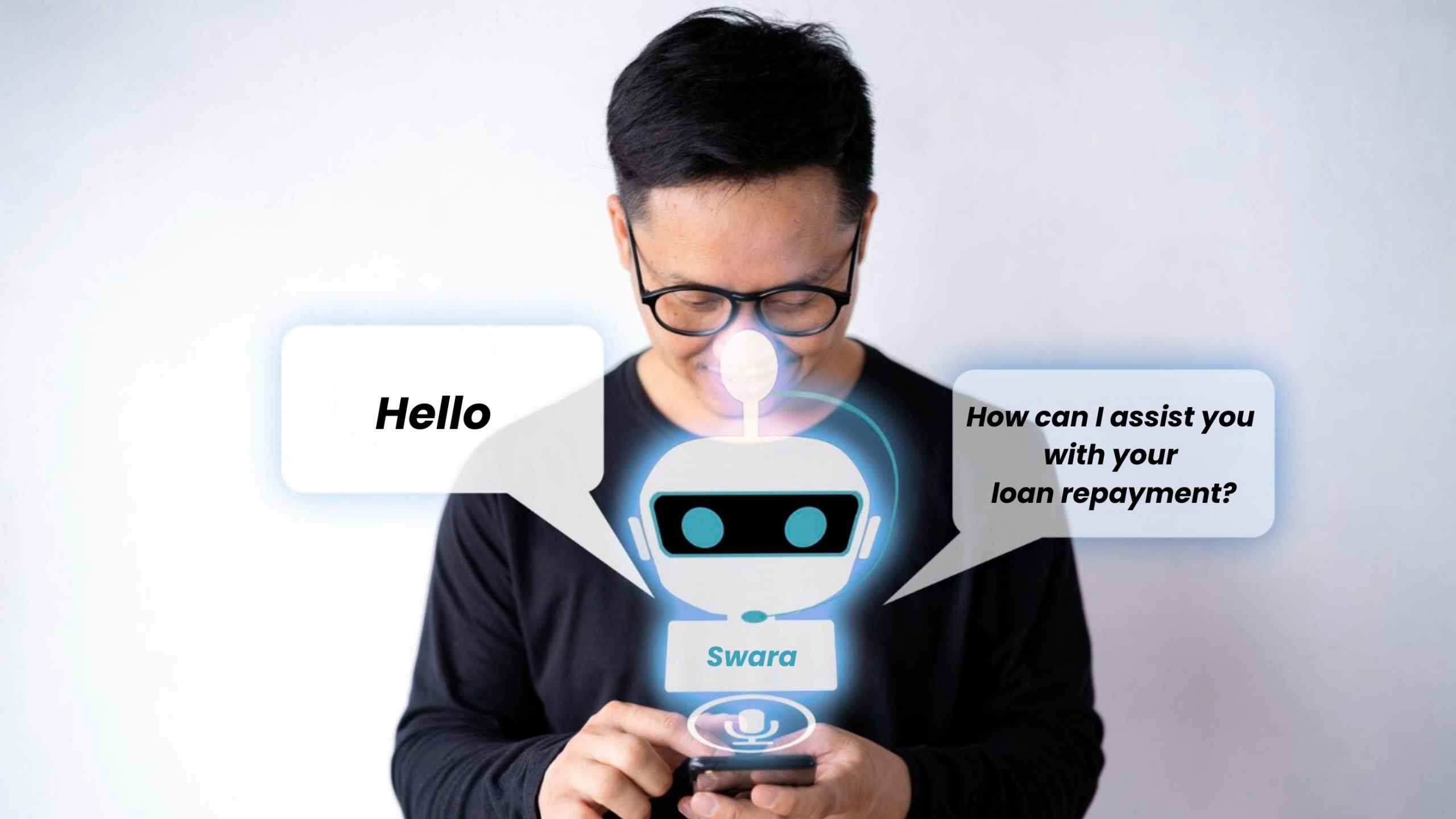
Debt collection has traditionally carried a reputation of being stressful for borrowers and often frustrating for lenders. Conventional tactics such as persistent calling and in-person visits can, at times, be perceived as aggressive and impersonal. They sometimes create adversarial relationships that damage trust.
But things are changing fast. A new approach is emerging: Conversational AI in collections. Instead of scripted, one-way calls, it enables empathetic and solution-oriented two-way conversations across voice and chat. Done right, it helps lenders recover more and faster, while giving borrowers a sense of control and respect.
What is conversational AI in collections?
Conversational AI in collections refers to intelligent AI based technology solutions that automates and manages customer interactions across channels in a human-lime manner. Unlike rigid call-center scripts, these AI systems use advanced models to hold natural, adaptive conversations.
They can:
- Understand borrower intent
- Predict likely outcomes
- Respond in real time
The result is smoother, more empathetic engagement, which leads to higher resolution rates and a much better customer experience.
Core elements of conversational AI
Modern platforms combine several powerful technologies to transform how lenders and borrowers interact:
- Large Language Models (LLMs): The conversation engine that enables fluent, human-like dialogue across text and voice.
- Natural Language Processing (NLP): Goes beyond keywords to detect intent, sentiment, and context.
- Speech Recognition & Text-to-Speech (ASR & TTS): Enable natural voice interactions by transcribing and generating speech instantly.
- Data-Driven Decisioning: Uses payment history, behavioral analytics, and compliance rules to guide conversations toward the best possible outcome.
Learn more about conversational AI in banking and finance →
Why trust matters in debt collections
Trust is at the heart of every repayment conversation. When borrowers feel heard, respected, and given options, they are far more likely to engage and stay committed. Conversational AI builds trust by:
- Reducing pressure, increasing empathy: AI voicebots can mirror tone, pause naturally, and respond without fatigue or bias—making conversations feel calm and respectful.
- Being available 24/7: Borrowers can check balances, request extensions, or set up plans anytime, without awkward calls.
- Offering personalized outreach: AI considers payment history, preferences, and communication channels to send the right message at the right moment.
- Keeping context across channels: A conversation started on WhatsApp can seamlessly continue over email or a call, without repeating details.
What lenders gain, beyond goodwill

Yes, trust improves repayment, but lenders also see significant operational advantages:
- Scalability: Automate reminders, FAQs, and payment links so human callers can focus on complex cases.
- Higher contact and recovery rates: Smarter outreach increases response and “promise-to-pay” conversions.
- Intelligent prioritization: AI flags risk, routes sensitive cases to specialists, and helps resolve surges efficiently.
- Built-in compliance: Consistent scripts and audit trails reduce regulatory risk while ensuring fair treatment.
The borrower journey, reimagined
Here’s how Conversational AI transforms the repayment process end-to-end:
- Friendly reminders when borrowers need them
Helpful outreach through borrowers’ preferred channels (sms, whatsapp, email, app) with clear, simple summaries and easy one-tap actions like viewing bills, setting payment dates, or requesting help. - Quick self-service that works for borrowers
Borrowers can instantly set payment dates, split payments into smaller amounts, request extensions, or explore relief options—without waiting on hold or facing judgment from anyone. - Clear settlement discussions
AI-powered solutions help borrowers review, discuss, and finalize settlement plans with full transparency and no confusing fine print.
- Making realistic payment promises
AI-powered systems help borrowers record promises-to-pay and guides both borrowers and lenders toward realistic next steps and timelines that actually work.
- Payment plans that fit borrowers’ situations
Flexible repayment schedules that can be adjusted and personalized based on borrowers’ real financial circumstances—not a one-size-fits-all approach. - Educating borrowers on defaults
Conversational AI explains the consequences of missed payments in plain language, so borrowers fully understand what’s at stake before making decisions.
- Rolling out collection schemes and offers
AI keeps borrowers informed about new payment programs, helpful offers, or relief options they might qualify for, making it easier to get back on track. - Smooth handoff to human support
When borrowers need to talk to a real person, AI ensures a seamless transfer with full context, so they don’t have to explain their whole situation again. - Clear updates every step of the way
Borrowers receive receipts, reminders, and status updates after each interaction, so they always know where things stand and what comes next.
Related Read: 7 Ways generative AI voicebots are revolutionizing customer experience (CX)
Quick-start playbook for collections teams
- Automate one high-volume task first (e.g., sending payment links or setting up plans).
- Go omnichannel early by adding WhatsApp/SMS alongside voice to reduce friction.
- Refine tone and scripts—small tweaks in phrasing or pauses can significantly change outcomes.
- Plan smooth human handoffs so context flows seamlessly to agents when escalation is needed.
Overcoming implementation challenges
- Ensuring ethical AI use: Train on diverse datasets, run audits, and monitor regularly to avoid bias.
- Balancing automation with human touch: AI handles routine tasks, while complex cases still need human empathy and judgment.
- Protecting data privacy: Strong security and strict compliance with regulations are non-negotiable to maintain trust.
Credgenics Swara: AI voicebot built for collections
Credgenics Swara has been designed specifically for collections. It combines proprietary LLMs with advanced speech technologies to deliver natural, multilingual conversations that adapt emotionally and contextually.
Swara can:
- Send payment links instantly.
- Switch languages in real time.
- Plan next steps across digital, voice, field, or even legal channels.
For teams already using the Credgenics platform, Swara integrates seamlessly—bringing unified context, compliant workflows, and detailed reporting. Unlike generic chatbots, it understands the nuances of repayment conversations from day one.
Discover how Credgenics Swara Voicebot can revolutionize your collection conversations.
The bottom line
Collections don’t have to be combative. Conversational AI in collection empowers lenders to scale trust and empathy while improving recovery rates, cutting costs, and ensuring compliance.
It proves technology can be both efficient and human, helping lenders collect more while borrowers feel respected and supported. The future of collections is collaborative, and Conversational AI is leading the way.

FAQs
Q1. What are the advantages of using Conversational AI in collections?
Conversational AI improves repayment rates, lowers costs, ensures compliance, and builds borrower trust. It automates routine tasks, scales effortlessly, and creates empathetic, consistent interactions that lead to faster resolutions.
Q2. How can organizations apply Conversational AI in collections?
Start small—automate one high-volume process like sending reminders or payment links. Then expand into omnichannel communication (voice, chat, WhatsApp, SMS). Always ensure smooth human handoffs for sensitive cases.
Q3. What happens if Conversational AI is unable to resolve a collection case?
If the AI detects complexity, high risk, or borrower distress, it escalates seamlessly to a human agent. The agent receives the full conversation history, so borrowers don’t need to repeat themselves.
Q4. Can Conversational AI handle complex payment negotiations in debt collection?
Yes, up to a point. AI can suggest flexible repayment options, split plans, or extensions based on borrower profiles and rules. For highly complex negotiations, it hands over to a trained agent while ensuring a smooth, context-rich transition.