Insurance policy lapses remain one of the biggest challenges for the Indian insurance industry. According to IRDAI, the 13th‑month persistence ratio for life insurers is around 65–70%, which means nearly one‑third of policies lapse within the first year. This not only impacts insurers’ profitability but also weakens customer trust and long‑term industry penetration.
In this guide, we explain what lapse rates mean, why they occur, and how insurers can reduce insurance lapse rate by 20% using data‑driven strategies and AI‑powered renewal engagement.
What is an Insurance Policy Lapse?
An insurance policy lapse occurs when a customer fails to pay the renewal premium within the grace period. Once lapsed, the policyholder loses coverage benefits, and insurers lose recurring premium inflows.
Insurance policies often lapse when customers fail to renew premiums on time. In India, several recurring factors contribute to this challenge:
- Limited customer engagement during annual renewal cycles
Customers interact with insurers only once a year, leaving long gaps that weaken recall and commitment.
- Fragmented communication channels
Outreach is scattered across agents, and digital channels, making it difficult to maintain consistent engagement.
- Lack of personalized outreach
Generic reminders fail to resonate with diverse customer segments, especially in a multilingual market like India.
- Low visibility into early churn indicators
Without predictive insights, insurers struggle to identify customers at risk of lapsing before it’s too late.
- High costs of manual follow‑ups
Traditional renewal processes rely heavily on manpower, increasing costs while limiting scalability.
The Impact of High Lapse Rates
- Revenue loss: Missed premiums reduce long‑term profitability
- Customer churn: Disengaged policyholders rarely return
- Operational inefficiency: Manual processes increase costs
- Industry penetration gap: India’s insurance penetration is still below 5% of GDP; lapses widen the protection gap
How to Reduce Insurance Lapse Rate by 20%
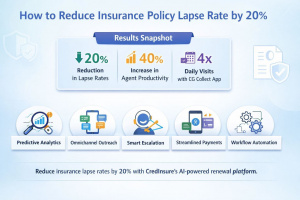
1. Predictive Analytics
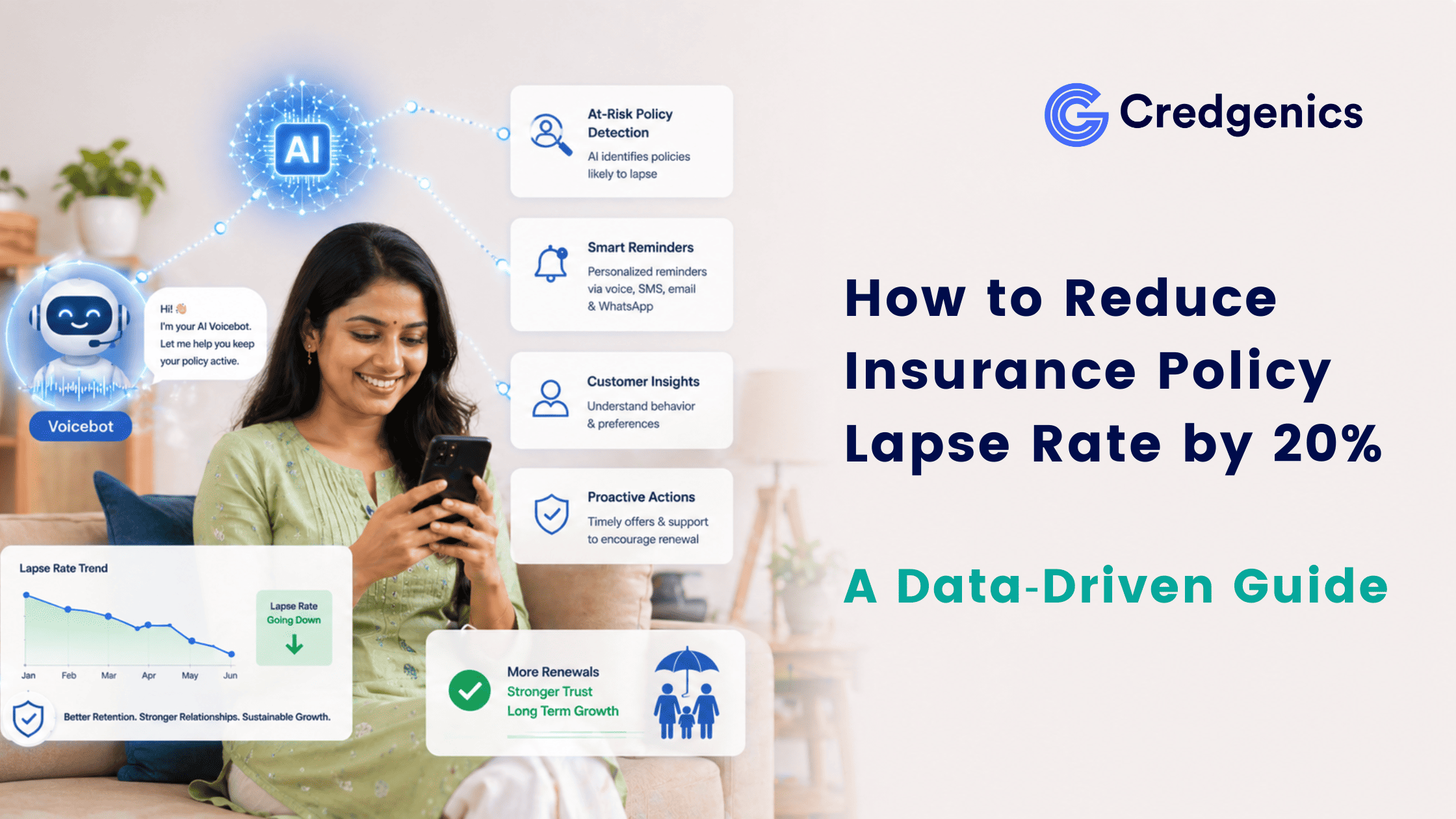
AI models can forecast which customers are most likely to lapse. By analyzing propensity‑to‑renew scores, insurers can prioritize outreach to high‑risk segments.
2. Personalized Omnichannel Engagement
Engage customers through WhatsApp, SMS, email, GenAI voicebots, and videos. Vernacular language support builds trust and ensures inclusivity.
3. Smart Escalation
Routine reminders can be automated, while agents step in for nuanced cases. Real‑time dashboards guide agents with context‑rich insights.
4. Streamlined Payment Journeys
Simplify premium payments with instant payment links, UPI, QR codes, and auto reconciliation. This reduces friction and drop‑offs.
5. Workflow Automation
Automated reminders, follow‑ups, and escalations ensure no policyholder is left unattended. Dashboards provide visibility into renewal funnel performance.
Quantifiable Outcomes with CredInsure
CredInsure’s AI‑powered renewal engagement platform delivers measurable improvements:
- 20% reduction in lapse rates through proactive engagement.
- Higher persistency ratios across portfolios.
- Lower operational costs with predictive dialers and automated campaigns.
- Improved customer loyalty through empathetic, multilingual GenAI voicebots.
👉 Explore the full capabilities of CredInsure’s Renewal Engagements
Conclusion
Reducing insurance lapse rates by 20% is achievable with a data‑driven, AI‑powered renewal strategy. By combining predictive analytics, omnichannel engagement, streamlined payments, and smart escalation, insurers in India can strengthen persistency, lower costs, and build lasting customer trust.
CredInsure delivers exactly this — redefining renewal engagement for insurers.
👉 Learn more about CredInsure’s capabilities .
Frequently Asked Questions (FAQs)
Q1. How does AI help reduce lapse rates?
AI predicts which customers are likely to lapse, automates outreach, and personalizes communication across channels.
Q2. Can lapse reduction improve profitability?
Yes. Higher persistency means steady premium inflows, reduced acquisition costs, and stronger customer relationships.
Q3. What role do agents play in AI‑driven renewal?
Agents handle complex cases and escalations, supported by real‑time dashboards and incentive tracking.