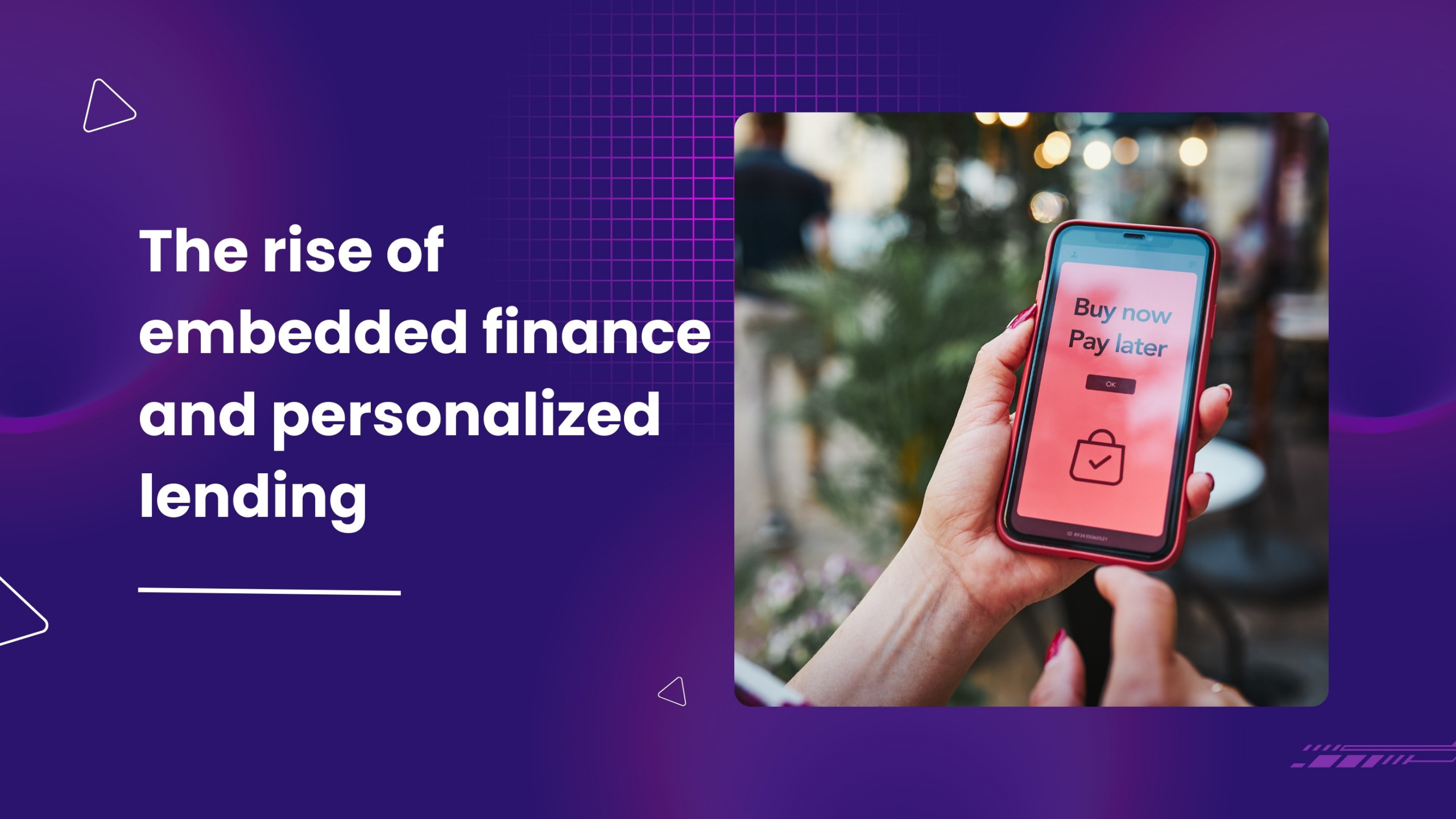
The lending landscape is experiencing a seismic shift. Embedded finance and personalized lending, powered by AI-driven decision engines and alternative data sources, are helping to dismantle these barriers. The result? A more inclusive, accurate, and seamless lending ecosystem that represents the true future of consumer lending.
What is embedded finance?
Embedded finance transforms how we access financial services by integrating them directly into non-financial platforms and experiences. Instead of visiting a bank or filling out lengthy loan applications, credit becomes available at the exact point of need.
- When you opt for Buy Now, Pay Later (BNPL) at an e-commerce checkout, that’s embedded finance.
- When a ride-sharing app offers you an instant micro-loan or flexible payment option, that’s embedded finance.
- When a SaaS platform integrates credit lines for small business users, that’s embedded finance at work.
Recommended Read: What is embedded finance, and how will it change fintech?

How AI-powered smart decisioning is revolutionizing credit assessment
Thanks to AI in lending, financial institutions are moving beyond static credit scores. With alternative data and advanced algorithms, lenders can now assess creditworthiness more holistically, creating fairer, more accurate, and more inclusive models.
Some examples of the new data sources powering this shift include:
- Payment history: Rent, phone bills, utilities, and subscription services.
- Transaction data: Bank account inflows and outflows.
- Cash flow analysis: Especially for small businesses and freelancers.
- Behavioral insights: Spending patterns, savings discipline, and repayment behavior on digital platforms.
The benefits of personalized lending
For Consumers:
- Expanded Financial Inclusion: Previously underserved populations (gig workers, recent graduates, and small business owners) gain access to credit based on their actual financial behavior rather than limited credit history.
- Seamless User Experience: Embedded payments and lending options integrated into apps and websites eliminate friction, making financing as simple as a few taps on a smartphone.
- Customized Terms: Personalized interest rates, repayment schedules, and loan amounts based on individual financial profiles, making credit more affordable and manageable.
- Point-of-Need Access: Credit becomes available exactly when and where it is needed—during checkout, at service booking, or when business opportunities arise.

For Lenders:
- Market Expansion: Access to first-time borrowers and previously underserved demographics represents massive growth opportunities in untapped markets.
- Enhanced Risk Management: AI-powered underwriting reduces default rates by incorporating comprehensive financial behavior data, leading to more accurate risk assessment.
- Operational Excellence: Automation dramatically reduces processing costs while improving approval speed and customer satisfaction.
- Competitive Differentiation: Early adoption of embedded finance capabilities provides significant competitive advantages in crowded financial markets.
Embedded lending platforms thus create a true win-win, expanding access while protecting lenders’ bottom line.

Recommended Read: Top lending innovations transforming the future of finance
The future is personalized and embedded
As digital ecosystems expand, the line between banking and non-banking services will blur even further. From embedded payments in everyday apps to AI-powered decision engines offering tailored loans, the future of consumer lending is deeply integrated into the platforms people already use daily.
This is not just innovation—it is transformation. Financial services are moving from being products you seek out to experiences that find you, at the right time, in the right place.

Conclusion: A shift we can’t ignore
Embedded finance and personalized lending mark more than just an upgrade in financial services, they represent a fundamental reimagining of how credit fits into people’s lives. As finance becomes deeply woven into digital ecosystems, it moves from being a product people seek out to an experience that meets them where they are.
What lies ahead is a landscape where credit is contextual, invisible, and instant, integrated seamlessly into platforms, tailored to individual needs, and powered by AI-driven intelligence. This shift expands inclusion, enhances trust, and creates new growth opportunities for lenders willing to adapt.
The message is clear: the future of lending is embedded, personalized, and transformative. The only question is how prepared institutions are to embrace it.

FAQs
- What is embedded finance in simple terms?
Embedded finance is when financial services like loans, payments, or insurance are integrated directly into non-financial platforms. For example, when you choose a “Buy Now, Pay Later” option at an e-commerce checkout, that’s embedded finance in action. - How does embedded finance change the future of consumer lending?
By making credit accessible at the point of need, embedded finance eliminates friction in the borrowing process. It allows consumers to access real-time credit approval while giving lenders new ways to reach customers within the apps and services they already use. - How does AI improve personalized lending?
AI in lending analyzes alternative data such as transaction history, digital payments, and cash flow patterns. This creates a more accurate picture of a borrower’s financial health, enabling tailored loan offers, faster approvals, and better risk management for lenders. - What role do alternative credit scoring methods play?
Alternative credit scoring goes beyond traditional models by considering non-traditional data points like mobile payments, subscription history, or even e-wallet usage. This helps lenders serve “thin-file” borrowers who would otherwise be invisible to the system. - Are embedded lending platforms safe for consumers?
Yes. Embedded lending platforms operate within regulated frameworks and often partner with licensed banks or NBFCs. Combined with AI-powered risk assessment, they ensure both compliance and consumer protection while delivering faster, more convenient credit access. - What industries are adopting embedded finance the fastest?
E-commerce, ride-sharing, travel, healthcare, and SaaS platforms are leading the way. From embedded payments at checkout to in-app microloans, these industries are integrating lending solutions to enhance customer experience and drive loyalty.